
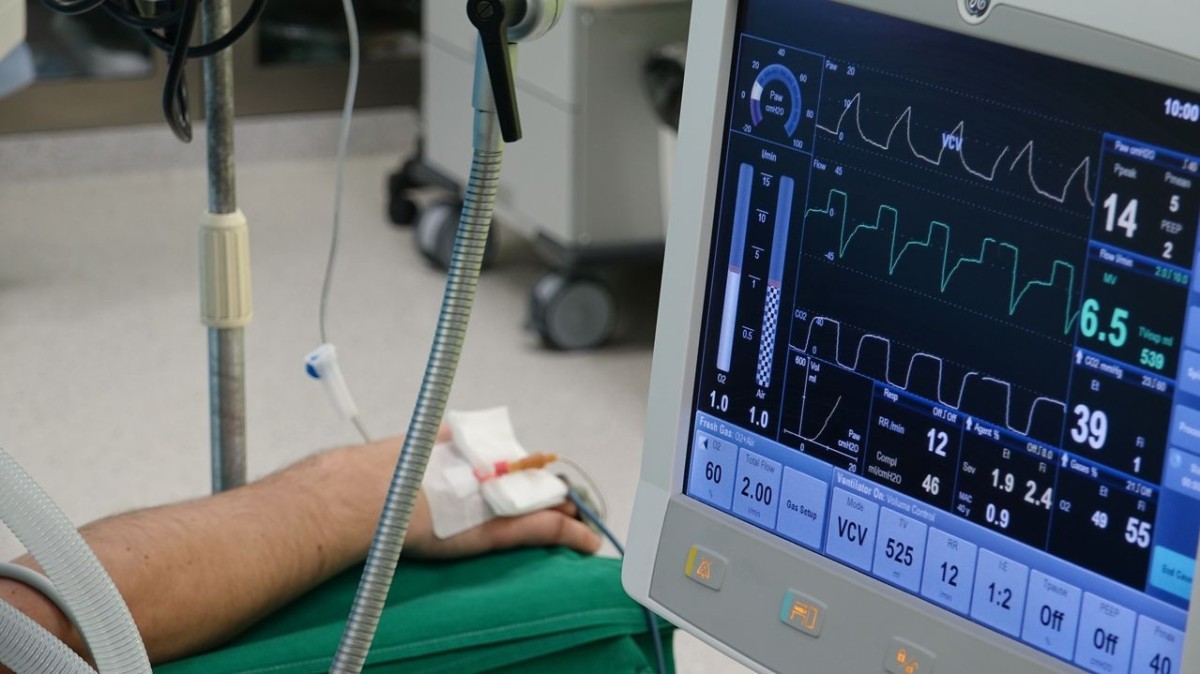
Software platform created by Kochi-based Open Healthcare network now helps hospitals in 10 Indian states. Image: Viktors Duks/Pexels
 By Hari Kumar, on June 09, 2026
By Hari Kumar, on June 09, 2026
By Hari Kumar, on June 09, 2026
When Covid-19 overwhelmed hospitals in 2020, a small group of volunteer developers in Kerala built software to track hospital bed availability in Ernakulam. Six years later, that emergency project has evolved into Open Healthcare (OHC) network, an open-source platform used across 10 states that now collectively touch an estimated 20 crore people.
Kerala’s healthcare model is widely regarded as one of the state’s biggest achievements, often cited by organisations such as Unicef as an example for nations with far greater resources. The state has also embraced technology in healthcare and the launch of Kerala Care, a statewide palliative care grid is an example. What has received far less attention is the free software powering that effort.
OHC, a Kochi-registered nonprofit, traces its roots to CoronaSafe Network, an improvised pandemic response platform shepherded by former Startup Village CEO Sanjay Vijayakumar during the early days of Covid-19. From a handful of developers working through lockdown, OHC has grown into one of India’s most significant open-source healthcare initiatives.
Recognised by the United Nations as a Digital Public Good (DPG) in 2021, its software can be implemented free of cost, offering an alternative to expensive proprietary systems. This has attracted international attention since then and Bodhish Thomas and Gigin Chandy, co-founders of the platform, were part of the GitHub Universe 2025 keynote address.
Panic Button: The initial brief for OHC was simple: track hospital bed availability across Ernakulam district as rising Covid-19 cases strained the healthcare system.Success quickly brought new demands. The platform was soon expanded to allocate specialised ambulance fleets, track oxygen availability, support 10-Bed ICUs and assist with hospital management.
The home-grown platform soon caught the attention of Infosys co-founder Nandan Nilekani and Aadhaar founding CTO Srikanth Nadhamuni. They chose OHC to manage 10-Bed ICU facilities being set up in states such as Andhra Pradesh during the pandemic. Using a hub-and-spoke model, the platform enabled specialists to treat patients in remote areas without having to travel there physically.
The solutions developed during the pandemic ended up addressing a much larger problem. Across India, shortages of funding, infrastructure and specialist personnel have created stark gaps in healthcare access. Specialists tend to cluster in cities, while district hospitals often manage crises with limited resources.
Widespread Use: The 10-Bed ICU platform proved to be a breakthrough. Today, their ICU units are deployed across Andhra Pradesh, Assam, Jharkhand, Karnataka, Manipur, Meghalaya, Nagaland, Puducherry, Sikkim and Telangana. According to OHC, this coverage extends across 28 per cent of India and an estimated 100,000 lives saved.
The idea is straightforward but powerful in practice. The platform connects medical colleges with taluk hospitals, allowing specialists to monitor patients through high-resolution cameras and access medical device readings remotely. This reduces pressure on tertiary-care hospitals, as many patients can be treated closer to home.
A single specialist can monitor multiple ICUs across different locations simultaneously. As one OHC video puts it: “The ratio of doctors to patients in India is not compatible with the actual need. Every minute saved on paperwork and logistics is a minute spent with a patient.”
Now OHC helps set up ICU units in government hospitals, implement standard clinical protocols and train staff, partnering with state governments to deliver critical care in underserved regions.
Mission Continues: When the acute phase of the pandemic ended, many organisations might have consolidated, protected what they had built or slowed down while searching for a revenue model. OHC chose a different path. It followed the next healthcare challenge: palliative care.
The model pioneered in Kerala under Dr MR Rajagopal, now chairman emeritus of Pallium India, has become a template for much of the country. It focuses on keeping terminally ill patients connected to care through a network of hospitals, NGOs and home-care providers.
OHC was tasked with bringing these stakeholders under one digital umbrella. The result was Kerala Care, a mobile-first platform that allows nurses and Accredited Social Health Activist (Asha) workers to record patient information even when offline. It captures structured patient records in FHIR format, the international standard for healthcare interoperability, and feeds real-time dashboards that track coverage and outcomes across the state.
The Kerala Care network currently supports 2.8 lakh bedridden patients – roughly 1.6 times Kerala's total hospital bed capacity of 1.8 lakh across both the public and private sectors. The grid recorded 1.6 million home-care visits during the first 10 months following its launch in June 2025.
In effect, the network is helping care for a patient population that Kerala's hospitals alone would struggle to accommodate. It does so through a distributed system of nurses, Asha workers and physicians connected through a common digital platform.
Next Mission: But OHC says the work is far from finished. Over the next year, it plans to expand coverage to eight lakh senior citizens and patients living with chronic conditions.
OHC’s portfolio continues to expand. Its latest offering is a hospital management system that helps hospitals digitise operations quickly and efficiently. For healthcare administrators trying to improve efficiency while operating under budget constraints, it offers an open-source alternative to commercial systems.
Early adoption figures suggest growing interest. In Jharkhand, 36 government hospitals have already adopted the platform, with expansion planned to another 89 facilities. In Karnataka, three hospitals have implemented the system and another 17 are preparing deployments.
Two hospitals in Kerala, four in Assam and one in Manipur have also begun using the platform. OHC says discussions are underway with additional state governments. Apart from hardware and data centre expenses, the software itself is free to use.
High Praise: The work has attracted praise from some of the technology world's biggest names.Silicon Valley veteran Vinod Khosla has praised the 10-Bed ICU initiative. Microsoft CEO Satya Nadella described OHC as a "fantastic community", while Anna Makanju of the OpenAI Foundation highlighted its use of AI tools to expand access to quality healthcare. Nandan Nilekani compared it to Digital Public Goods such as Aadhaar and UPI.
"It strengthens public healthcare infrastructure through a collaborative PPP," he said.
These are not the kinds of endorsements typically associated with healthcare software vendors. They reflect something else: the credibility that comes when the code is open and the impact is measurable.
OHC now describes itself as building “FHIR-native, AI-ready Digital Public Goods”. Behind the jargon lies a larger idea: that governments do not always need to buy expensive proprietary systems and remain dependent on vendors for upgrades, integrations and support. Open-source alternatives can offer another path.
Kerala Model: The organisation's core team consists of around 30 highly skilled programmers, supported by a wider community of 1,389 contributors through GitHub. Some core members chose to stay despite receiving opportunities from technology giants such as Google and OpenAI.
“We may not be able to compete dollar-for-dollar with these tech giants. But the impact our work brings to society is much more priceless. That has been the biggest incentive driving our team,” says OHC director Pinaki Krishna.
Retaining such talent and expanding platforms across multiple healthcare domains requires significant resources. OHC has attracted philanthropic backing from organisations including eGov Foundation, ACT, the Michael and Susan Dell Foundation and others.
Kerala’s achievements are often discussed in terms of literacy, decentralisation, public health and social development. What OHC demonstrates is that the same ecosystem can also produce opensource digital infrastructure with relevance far beyond the state’s borders.
Boost for Kerala’s robotic sector
It is great to know that Kerala startups like GenRobotics, which went through a tough growing-up period, are now joining hands with up-and-coming firms to expand the state's robotics ecosystem. GenRobotics recently led a one crore rupee funding round for Thrissur-based Estro Tech Robotics, whose products include robots for retail advertising. The company is now looking to develop robots that can inspect and assess underground utility networks. Given that road authorities in Kerala often struggle to locate underground pipes, Estro Tech could find a ready customer in its home state
AI-powered robotics have started appearing in Kerala's retail sector as well, with LuLu Mall in Trivandrum unveiling Odigo, an AI-powered navigation robot introduced for the first time in Kerala. The mall says the navigation robot is aimed at helping visitors navigate the mall with ease and convenience. While the service is a relatively rudimentary application of the technology, expect more such robots to appear in the state soon.
Overlooked superfood opportunity
Another study has added weight to claims that green jackfruit can help control blood sugar levels and obesity. This time, the research was led by former Alappuzha Medical College principal B. Padmakumar. In a paper published in Current Nutrition and Food Science, the team reports that 50 diabetics given dishes prepared with jackfruit powder showed significantly lower blood sugar levels. While the market already offers many value-added products made from ripe jackfruit, green jackfruit products remain rare. At a time when healthy food is a fast-expanding market, it is surprising that more startups have not explored the potential of this home-grown produce.
Sports app that hunts for talent
The hunt for sporting talent is a booming business and, in India, as usual, this is happening mostly in cricket. A Swiss company has launched the Footbao app, which helps young footballers reach agents by uploading videos of their skills. AI then analyses and scores their performance, with the results sent to scouts and clubs. The app is now popular in countries such as Brazil and Argentina, where football is what cricket is in India. The technology behind the app is something sports bodies in India could also use, as talent hunting in a country as vast and diverse as India is a logistical nightmare. One wonders whether similar apps will emerge here as well.
The calculus of anxiety
Artificial intelligence threatening jobs remains a hot topic, and the latest group to join the queue is mathematicians. In a blog, Scott Aaronson, an American theoretical computer scientist at the University of Texas at Austin, says he is worried that we may be living through "the possibly last days of human relevance" in mathematics – and perhaps other fields too – unless there is some "magic human ingredient" that AI lacks. He is not alone. A group of mathematicians has issued a statement arguing that the use of AI in mathematics should be restricted. Their concern is that the recent success of AI models in resolving several longstanding mathematical conjectures could disproportionately affect students and early-career mathematicians.
