
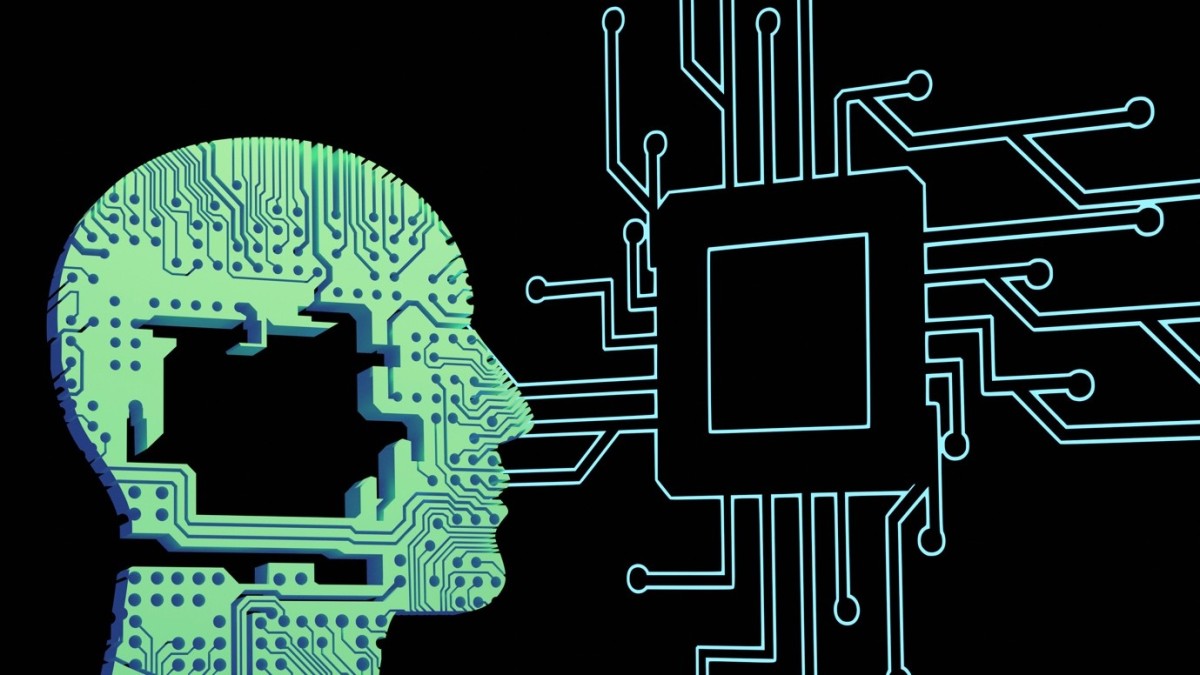
AI may be overhyped, but its potential to change the way we work is unmistakable. Image credit: Ron Lach/Pexels
 By Deepu S Nath, on September 22, 2026
By Deepu S Nath, on September 22, 2026
By Deepu S Nath, on September 22, 2026
For a young Indian trying to get his first job, artificial intelligence is beginning to look less like the technology of the future and more like a colleague who has arrived early and is already doing some of his work.
For companies, AI promises something even more attractive: fewer people doing more work. For investors, it is a gold rush. For the rest of us, it is difficult to know what to believe.
The sceptics say the AI boom is a bubble. Billions are being poured into data centres and chips while companies struggle to show that the spending is producing enough profit. The believers say we are at the beginning of the biggest technological revolution since the internet.
Strangely, both could be right.
AI may be overhyped as an investment while we seriously underestimate what it could do to the way we work.
That matters particularly in India, where the technology and services industry employs millions of people doing the kind of routine knowledge work AI is getting better at. And Kerala, with its educated workforce and technology ambitions, has plenty at stake.
Changing Scenario: The first wave of generative AI was easy to understand. You typed something. It wrote something back – an email, a report, some code.
Then came AI agents. They can break a problem into steps, use software tools, inspect information, make decisions and continue working towards a goal.
You can ask an AI system to find why a software application is failing, inspect the code, make a correction, test it and prepare the fix. Or investigate a customer’s complaint, look up the relevant information and draft a response.
But the key word is reliability.
A system that gets something right eight times out of 10 can look magical in a demonstration. Put it in charge of payroll, medical records or a financial transaction and the two failures become rather more important.
AI’s intelligence is also strangely uneven. It can solve a difficult problem and then make an elementary mistake. It can be brilliant at coding but poor at planning a real-world task.
The question is no longer simply whether AI is intelligent. It is whether it is reliable enough to be trusted with something important.
India’s problem: A large part of India’s technology success has been built on an enormous pool of educated people performing knowledge-intensive work for global customers.
AI does not have to eliminate these industries to disrupt them. It only has to make one worker considerably more productive.
If a team of 15 can eventually do the work that previously required 30, nobody has to announce that 15 jobs have disappeared. The company simply stops hiring as many people.
This may be more important than mass layoffs. AI could reduce new hiring before it reduces existing employment. That is particularly worrying for young people.
Research cited International Labour Organisation found that employment among 22-to-25-year-olds in occupations highly exposed to AI was about 19 percent below what might otherwise have been expected, although the researchers caution that this does not prove AI was the cause.
The concern goes beyond the number of jobs. For decades, companies have used junior employees to do relatively simple work. A young programmer writes basic code. An accountant prepares routine reports. A junior lawyer researches documents. They make mistakes, someone senior corrects them, and eventually they become the senior person.
AI could become very good at precisely those beginner tasks.
One experienced employee with AI may handle work previously assigned to several juniors. That makes economic sense. But if companies stop hiring juniors, where do tomorrow’s experienced employees come from?
The traditional career ladder assumes that people learn by doing increasingly difficult versions of the work. If the easiest work is automated, we may have to invent a new first rung.
That is a challenge for India, where millions of young people enter the workforce every year. It is also a challenge for Kerala, where education has long been seen as the safest route to economic mobility.
The AI bubble: Huge amounts of money are flowing into AI startups and data centres. Semiconductor companies, cloud providers and AI companies have become tied together in increasingly complicated financial relationships.
There are real questions about whether the revenue eventually generated by AI will justify the enormous cost of building the infrastructure.
But bubbles do not mean the technology underneath them is worthless. The dot-com crash destroyed enormous amounts of money. It did not destroy the internet.
India’s telecom boom provides another example. The brutal price competition that followed the arrival of Reliance Jio wiped out or weakened several operators. But it also helped create one of the world’s largest and cheapest mobile-data markets.
The AI boom could follow a similar path. Some companies will disappear. Some investors will lose money. Some valuations will look absurd in hindsight. And AI will still transform the economy.
The electricity problem: There is another reason to be sceptical about predictions of limitless AI growth.
AI needs electricity. A lot of it.
The giant data centres required to train and run increasingly powerful models need power, cooling, land and connections to the electricity grid.
The International Energy Agency expects global data-centre electricity consumption to roughly double between 2025 and 2030.
So the AI race is not simply about who builds the smartest model. It is also about who can get the chips, electricity, transformers, cooling systems, buildings and money required to run it.
The future of AI may therefore be constrained not by a shortage of clever algorithms but by something much more mundane: the power grid.
Software Changes: It is tempting to conclude that AI will kill programming. That is probably too simplistic. What is more likely to change is the economics of selling human hours.
If five engineers equipped with AI can produce what 15 engineers once produced, clients will eventually ask why they should continue paying for 15.
That does not make the five engineers irrelevant. Their value may shift towards understanding the problem, making decisions, checking AI’s work and taking responsibility for the result.
The IT industry may increasingly have to sell outcomes rather than headcount. That would be a profound change for India’s technology-services industry.
Unprepared Companies: Many companies have bought AI tools. Far fewer have redesigned their businesses around AI.
Giving every employee an AI assistant is not transformation.
Real transformation involves harder questions: What should an AI be allowed to do without supervision? Who is responsible when it gets something wrong? And if one person can now do the work of three, what should the company do with the other two?
These are management questions, not technology questions.
For students, the answer is not to chase whichever AI tool happens to be fashionable. Learn to use AI, certainly, but build knowledge underneath it. Understand a business or profession. Learn to question answers, solve problems and develop judgement.
For schools and colleges, banning AI is unlikely to work. Students need to learn how to use it without allowing it to replace their ability to think.
Governments, meanwhile, need to prepare for a labour market in which the entry-level job itself may change. That means thinking about education, reskilling, computing infrastructure and energy – not merely announcing another AI policy.
The uncomfortable possibility: There is a strange possibility at the heart of the AI revolution. We may be heading towards a world where intelligence, or at least some forms of it, becomes extraordinarily cheap.
If that happens, intelligence itself may stop being the scarce resource.
The scarce things could instead be judgement, experience, trust, creativity, relationships, curiosity and the willingness to take responsibility.
That is why the two extreme views of AI are both inadequate.
AI is not magic. It is not going to replace every human tomorrow. But neither is it just another chatbot fad that will disappear when the investment bubble bursts.
The bubble may burst, but the technology may remain.
For India, the challenge is to create a workforce that knows what to do when the easiest jobs are no longer there.
For Kerala, that challenge may be even sharper. We have spent decades building human capital by producing educated people and exporting their skills. The next challenge is to make sure those people are not competing with AI on the one thing AI is getting cheaper at doing.
AI may make intelligence cheap. What remains valuable will be judgement, experience, trust, creativity and the ability to take responsibility.
[This is an abridged version of an essay written by Deepu S Nath that appeared on Medium recently. Editor]
Indian fruit sector lacks the bite
One area where India still hasn’t fully tapped its potential is agricultural produce such as jackfruit. There is rising interest in developing value-added products from ripe fruits, but according to FreshPlaza, even the skin of the fruit is being used to make vegan leather. Mithilesh Desai of Jackfruitking Agro Producer Company says a pilot project for vegan leather made from the skin has attracted interest from Europe. Despite such potential, 50 to 60 per cent of the jackfruit grown in India goes to waste due to a lack of cold-chain infrastructure and processing facilities.
Unlike jackfruit, Indian mangoes are prized globally, but the country is yet to become a major exporter of the fruit. India remains the world’s biggest grower of mangoes, but most of its produce is consumed locally and exports less than 1 per cent of its domestic harvest. Mexico, being close to the US, ranks as the number one mango exporter in the world.
Genrobotics eyes South African market
Genrobotics is set to expand its horizons after signing an MoU with a major South African entity, the Armaments Corporation of South Africa SOC Ltd (Armscor). For Genrobotics, the agreement signed in Pretoria, expands its defence and space robotics programme, including its work on space-grade robotic arms and autonomous systems, while providing a structured pathway for technology validation and market access in South Africa and the wider African continent. The two organisations will identify and assess opportunities and, where separately agreed, co-develop and commercialise robotics technologies for defence and civilian applications.
When AI actresses forget their lines
Movie stars having slip-ups during press interactions is nothing new. But now we know even AI-generated actresses are prone to them. When Tilly Norwood, an AI-generated actress, was talking with British broadcaster Piers Morgan, she suddenly started speaking Mandarin while answering a question from actor Tom Conti, who was also on the show. But the conversation quickly switched back to English, and the AI actress admitted it was a glitch. Later, she tweeted: “You try speaking 30+ languages and see if you don’t show off occasionally.” Obviously, she doesn’t need a dialogue writer.
New York puts toilets on a timer
New York City is using technology to limit phone scrolling while using the toilet. The city already has a shortage of public toilets, with just one for every 8,697 people, and the problem gets worse when some users catch up on social media while sitting on the throne. The toilets, made by Throne Labs, will have a ten-minute window, after which the doors will open automatically. Users will get audio alerts and flashing lights before the doors open, making sure they are not caught with their pants down.
