
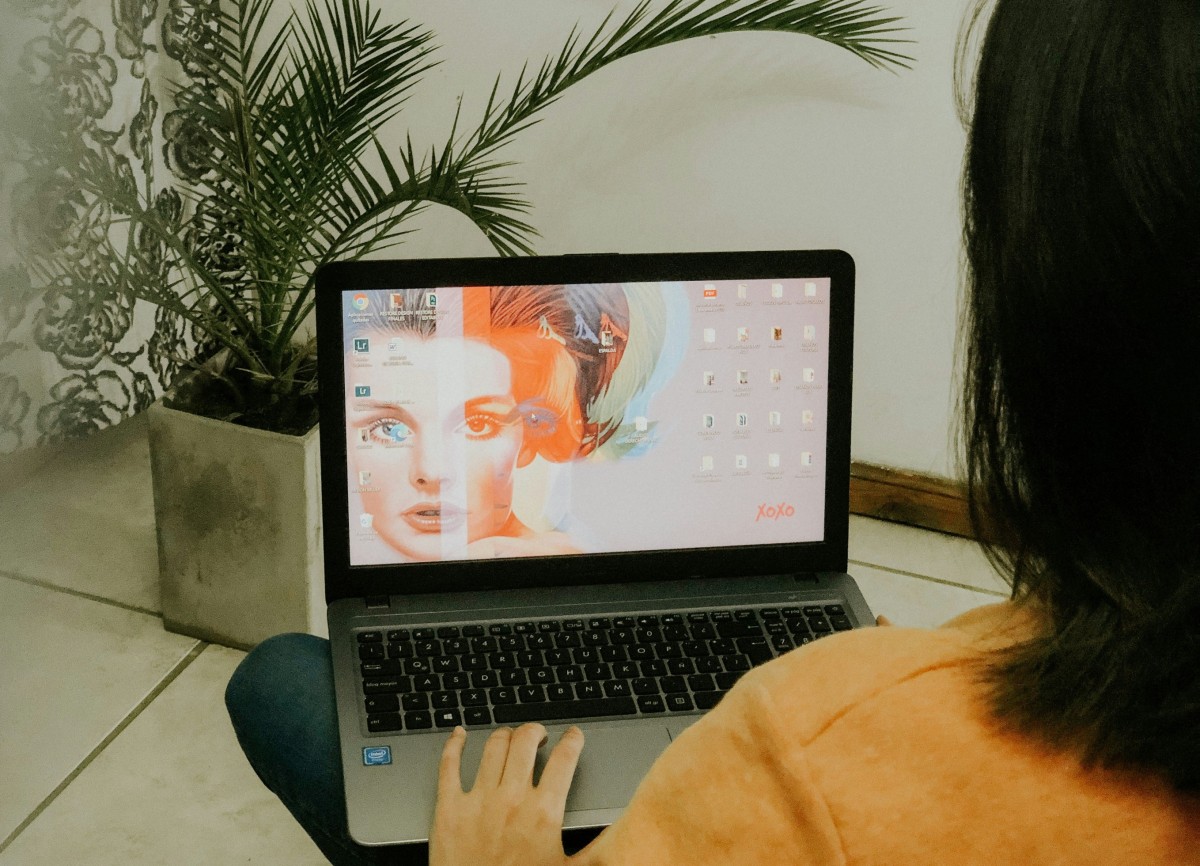
Our screens are now getting flooded with low quality content generated by artificial intelligence. Image: Nick Sanchez/Unsplash
 By Hari Kumar, on January 06, 2026
By Hari Kumar, on January 06, 2026
By Hari Kumar, on January 06, 2026
The artificial intelligence revolution was supposed to look different. The year 2025 started with experts predicting mass unemployment, algorithmic replacements, a world transformed before you can say AI. Instead, what’s actually dominating our digital lives is subtler and stranger: an endless deluge of synthetic monkeys, impossible gadgets, and demons battling on tomato helicopters.
This isn’t the future we were warned about – but welcome to the era of “slopwalking”.
AI has been creeping into our lives. If you weren't aware of it, you have been sleepwalking. Correction – slopwalking. You and I are being bombarded with AI generated words, sounds, pictures and videos everyday. Most of which fits the Cambridge dictionary's definition of slop –“content on the internet that is of very low quality, especially when it is created by AI”.
It is slightly different from sleepwalking. We are sometimes aware that what we see, read or hear is AI-generated, but we still consume it. That is the new deluge that we are facing: slopwalking.
Quick Bucks: It is now coming to a stage that anything and everything you come across on the internet could be AI generated. Because anyone with an idea can get AI to create text, image or video without acquiring the required skill to generate it. The quality maybe suspect, but hey, every magician is not a Houdini or a David Blaine.
Such low-quality digital content generated by artificial intelligence is now on all social media platforms. It is used for quick engagement and monetisation, leading to concerns about misinformation and digital clutter.
When you go online, watching slop is inescapable: often nonsensical AI-generated clips, like encounters with wild animals, AI characters promoting brands and non-existent gadgets that look straight out of Star Trek. Especially on platforms like Instagram and TikTok which promote short videos.
Many Choices: For that, you can thank new tools like OpenAI’s Sora, which was downloaded 1 million times within days of its launch (faster than even ChatGPT in 2021, which took a week to hit that number) and exploded in popularity after launching in app form in September.
Google’s Veo series, Kling made by Kuaishou, a Chinese tech company known for its short-video platform similar to TikTok and AI models built by Runway have had similar uptake. Now anyone can make videos with just a few taps on a screen.
Some of these creations look so realistic even when you know instinctively this is illogical. Remember the one of a bunch of bunnies bouncing around on a trampoline? As images and videos can be an income generator if they go viral, regardless of the quality, more people are now joining the queue.
Coming Tsunami: It is estimated that roughly 34 million new images are generated by AI each day, and that does not account for the speedy rise of accessible video generators. Consider that in the first seven weeks after its launch in May, users of Google's Veo 3 had already created more than 40 million videos.
This megatsunami of content has quickly overwhelmed our visual culture. It's now thought that about 70 per cent of all images shared on social media are generated by AI.
A recent survey done by video-editing company Kapwing says more than 20 percent of the videos that YouTube’s algorithm shows to new users are “AI slop”.
They surveyed 15,000 of the world’s most popular YouTube channels – the top 100 in every country – and found that 278 of them contain only AI slop. Together, these AI slop channels have amassed more than 63 billion views and 221 million subscribers, generating about 117 million US dollars in revenue each year, according to estimates.
Indian Slop: If you think these are happening in some crazy place far away, perish the thought. Kapwing’s study found that the most viewed channel was from India. Bandar Apna Dost, which features a monkey as the main character, now has 2.4 billion views, 2.76 million subscribers and is estimated to be making 4.2 million US dollars.
The short video maker also shows a muscular character modelled off the Incredible Hulk who fights demons and in one episode shows him on a helicopter made of tomatoes. Watch that channel and you will know what could be headed your way in future.
While those who make millions may be a few, there are countless creators who are trying to make a living by manufacturing slop and brain rot material to grab eyeballs.
Alarm Bells: Part of the threat of AI slop and some forms of brain rot is in how they have been normalised and may come across as harmless fun. But slop and brain rot prey on the laziest areas of our mental faculties.
Researchers have shown how the “illusory truth effect” makes people more likely to believe in claims or imagery the more often they encounter it. AI tools make it easy for bad-faith actors to construct a fake enemy or situation that supports their underlying political beliefs or goals. Seeing is believing, studies have shown, even when the viewer has been explicitly told that a video is fake.
The problem is so acute that head of Instagram, Adam Mosseri, says AI-generated content has killed the curated aesthetic and says most users under 25 have already abandoned the trend for more personal direct message photos and “unflattering candids”. A bit rich for a platform which had pushed filters to enhance portraits and provides AI tools to users.
“Platforms like Instagram will do good work identifying AI content, but they'll get worse at it over time as AI gets better,” he says, as if the platform is already throwing in the towel. Then he also goes on to say camera makers should now come to the rescue, by providing watermarks. Sounds more like an SOS from a social media platform.
Rat Race Continues: While one arm of Meta says this, another says they will soon add AI to their kit. WhatsApp has announced that it is going to provide AI-powered image editing to let users enhance photos. It says now that it will be only for status update pictures, but as the AI company rat race continues, all such promises could vanish.
The warnings are now coming from AI’s most visible proponent: Sam Altman. His company gave the world ChatGPT and Sora – tools now generating millions of slop material daily. But now he warns that AI technology poses significant risks to mental health and media trust, particularly through deepfakes and misinformation. When AI’s biggest champion sounds the alarm, perhaps we should pay attention to what we’re slopwalking through.
The year 2025 started with the hype about AI being the discovery like fire or electricity. But that seems a little further off at the moment, if at all. We were promised intelligence; what we got was a deluge – and now we slopwalk through it.
Startup funding keeps pace
The year 2025 saw Indian startups attract funds worth 11 billion US dollars, just 17 per cent less than the previous year. Tracxn data shows investors are getting more selective, and that India is not witnessing the AI-fuelled frenzy seen in other parts of the world. Venture capital is increasingly flowing into manufacturing and deep-tech sectors, says a TechCrunch report. AI startups did attract funds worth around 643 million US dollars across 100 deals in 2025 – a modest 4.1 per cent increase from a year earlier – the report points out. But in the United States, AI companies secured 121 billion US dollars, a 141 per cent jump from 2024.
That kind of diversification is set to continue in India, with New Delhi approving 22 new projects under the electronics component manufacturing scheme. Officials say this will generate production worth 2.58 lakh crore rupees (28.6 billion US dollars) and create nearly 33,800 direct jobs. The approved projects cover key parts of the electronics supply chain, including basic components such as printed circuit boards, capacitors, connectors, enclosures, and lithium-ion cells. The projects are spread across multiple states, indicating a wide base of manufacturing taking shape in India.
Home-made MRI scanner arrives
A Bengaluru-based company has developed what it says is India’s first fully domestic MRI scanner. The scanner is the result of nearly 12 years of research and development, says Arjun Arunachalam, the founder of the startup VoxelGrids. The first clinical installation of the scanner has been completed at the Chandrapur Cancer Care Foundation near Nagpur. The startup, which is supported by Zoho, says its key innovation was the development of a helium-free dry magnet design unlike traditional machines, which makes it less costly and easier to maintain and more suitable for Indian hospital conditions, reports MedBound Times.
India now woos more GCCs
India’s tech scene is slowly shedding the tag of being a backend office hub and emerging as a hotspot for Global Capability Centres (GCCs). More than 1,700 GCCs employing around 1.9 million professionals now operate in India, says YourStory. It is estimated that this sector generated around 65 billion US dollars in revenue in FY2024, and this figure is expected to cross 100 billion US dollars by 2030, according to a report by TeamLease. While cities such as Bengaluru, Chennai, Hyderabad, Pune, Mumbai, and Delhi-NCR remain the major destinations, the share of GCCs in Tier II cities has increased from 5 per cent in 2019 to 7 per cent in 2025. The report says that apart from large global corporations, mid-sized companies as well as startups are now also looking to India to set up GCCs.
Still waiting for the magic kiss
Cops going undercover is nothing new. But a policeman turning into a frog? That, remarkably, is what an AI-generated police report in Heber City, Utah, claimed after the local police department began using an AI-powered report-writing tool that analyses bodycam footage, according to the Futurism platform. Somewhere along the way, the software appears to have mistaken reality for Disney, picking up dialogue from a movie playing in the background –The Princess and the Frog, no less. No fairytale ending for AI just yet: just a frog-sized reminder of its limits.
