
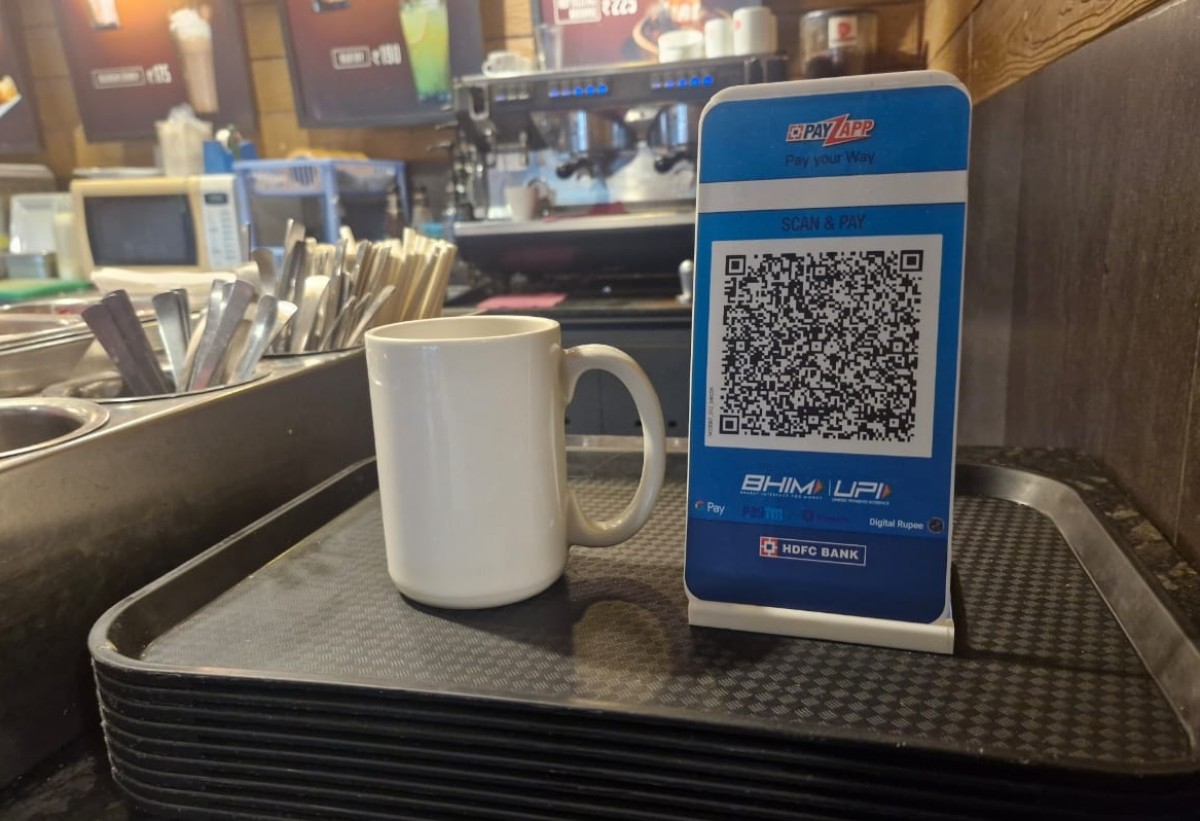
UPI was created as a digital public good and its success has attracted global attention. Photo: TikTalk News
 By Hari Kumar, on August 18, 2026
By Hari Kumar, on August 18, 2026
By Hari Kumar, on August 18, 2026
For a country better known for exporting engineers than building its own global technology platforms, UPI or unified payment interface is an unusual Indian success story.
It arrived at a moment when the future of technology looked like a choice between two well-defined paths: Silicon Valley, throwing billion-dollar R&D budgets behind platforms designed to capture users and monetise every transaction, and Beijing, backing its tech giants with the full weight of the state.
Instead, India, which didn't have with neither the venture capital of one nor the sovereign muscle of the other, built something neither had – a seamless method to transfer cash instantly – and largely gave it away.
UPI was never supposed to be a company. It was built as an open, free-to-join facility, owned by no one. Banks, fintechs, a roadside vendor’s QR code and a five-rupee tea stall could all use it, with none of them paying a tax. That was the design, and for a decade it worked.
Two years ago, a key architect of the system, Pramod Varma, laid out the idea precisely while speaking in his hometown of Trivandrum. The idea behind DPI (digital public infrastructure) was like laying down a rail track. It is up to the innovators to imagine what kind of trains can utilise that facility, he said.
The rail stays neutral and free. The trains – the apps and products – are where innovators compete and profit. Neither the state nor any single company owns the track.
This has jolted businesses built around transaction charges, from credit card companies and banks to ATM machine makers and currency note printers. A system that put users’ convenience at its core – including the decades-long “no change” problem – has trumped traditional private-sector models.
A prominent Chinese analyst also recently noted that, despite his country’s technical capabilities, India has taken the pole position in the digital model for public good with UPI.
But the Taxation and Other Laws (Amendment) Bill, 2026, passed by Parliament, fundamentally shifts UPI away from that core digital public infrastructure philosophy.
Framed as a means to fund the platform’s upkeep, the new law gives the government the power to decide, by notification alone and without returning to Parliament, which payment modes can be charged and which remain free. The custodian of the rail line now gets to pick which trains pay a fare – and which don’t.
The cost argument: The reason cited by the government is straightforward: the cost to keep UPI running is going up as crores of transactions are handled every day. UPI has become one of the world’s largest payment systems, and its growth is still rising, with more countries looking at the system. But critics of the move have raised substantial doubts about the wisdom of charging for it.
Finance Minister Nirmala Sitharaman says person-to-person payments will remain free and only merchants making transactions above 2,000 rupees will need to pay a small fee. For some business-directed UPI transactions above the 2,000-rupee threshold, the potential MDR is described as nominal and far lower than credit and debit card rates.
UPI processed around 2,370 crore transactions (23.7 billion) worth 29.9 lakh crore rupees (29.9 trillion rupees) in July, according to the National Payments Corporation of India (NPCI). The government says maintaining such a large ecosystem requires continued investment in technology, cybersecurity and payment infrastructure. Bringing back MDR on selected transactions could give payment companies a direct revenue stream to support those investments.
One unintended consequence could be merchants passing on the charges to customers or reverting to cash payments. A LocalCircles survey of 45,000 respondents across 322 districts in India found that 53 percent would move away from UPI for transactions if an MDR were imposed on large merchants. Of these, 27 percent said they would switch to credit cards, 14 percent to debit cards, and 12 percent to bank transfers or cash.
Numbers game: The government’s case rests on cost, which is now borne by the banks and the National Payment Corporation of India. But the case for where that money should come from doesn’t hold up as well as the case that it is needed.
According to banking industry officials cited by The Hindu, the platform costs about 41 paise per transaction to operate and maintain. With 24,161.69 crore transactions recorded in FY2025-26, that works out to roughly 9,900 crore rupees for the year.
That is not pocket change. But it looks rather different when placed against the RBI’s balance sheet. The central bank transferred about 2.9 lakh crore rupees to the Union government as dividend in the same year. Maintaining UPI at the estimated cost would therefore have amounted to roughly 3.4 percent of that transfer.
Then look at what UPI has already saved the system it is accused of burdening. ATM visits have fallen sharply as UPI usage has climbed – and every transaction that moves away from cash is a transaction the Reserve Bank does not have to print, transport or guard. A Visa-commissioned estimate put India’s total cost of handling cash at around 1.7 percent of GDP in 2014-15. Even a tenth of that today would run past 30,000 crore rupees.
The RBI’s own printing bill alone came to 4,875 crore rupees in FY26 – a cost UPI has been quietly keeping in check for a decade, along with the parallel expenses banks carry for ATM machinery, security guards and cash-loading logistics. An article in The Ken says banks saved 720 crore rupees in 2025 alone through closing down of ATMs.
There is a second-order benefit too, easy to undercount because it does not show up as savings on any single ledger: every transaction that moves through UPI, from a ten-rupee tea to a lakh-rupee purchase, is verifiable and digitised, narrowing the space for unaccounted cash to circulate. That’s a policy asset most tax authorities would pay for outright.
New models: None of this means the free-rail model funds itself by magic. Somebody still has to build the trains, and the smartest players have already worked out how to profit without a toll on the tracks.
Paytm’s soundbox – the little speaker that calls out “payment received” – now has millions of merchant subscriptions, a business built entirely on top of a free rail, monetising trust and convenience rather than the transaction itself.
That’s the kind of model the architecture was built to reward. The MDR proposal, aimed at merchants and eventually perhaps the users riding the rail, points the fee in the opposite direction.
Global view: It’s also a reversal India can’t easily explain away on the world stage. At the G20’s Virtual Leaders’ Summit in November 2023, Prime Minister Narendra Modi proposed a Global Digital Public Infrastructure Repository and a Social Impact Fund.
He urged that DPI be built as a permanent, universally free public good – particularly for the Global South, which risks being locked out of digitisation if the technology remains in the hands of a few private players or state actors.
That is exactly what Mao Keji, a China-based analyst at the National Development and Reform Commission’s International Cooperation Center, wrote in World Affairs, a journal published under China’s own foreign ministry. He said India’s DPI push amounted to the country’s first real attempt at offering a “major power” public product, comparing it explicitly to China’s own Belt and Road ambitions.
That is a rare concession from Beijing’s side of the ledger: an acknowledgment that India, not China, got there first, despite Beijing’s far larger hardware base and technical muscle.
On the other side of the globe, the United States Trade Representative has classified India’s zero-cost digital payment ecosystem as a foreign trade barrier, arguing that zero-MDR on platforms such as UPI and RuPay gives them an advantage over US card networks such as Visa and Mastercard.
Brazil has faced a similar fight over Pix, its free instant payment system, with the US imposing a 25 percent tariff under Section 301 amid objections to the Brazilian system. But Brazil has refused to budge.
Going off-rail: The Chinese acknowledgment and the American pushback point to the same thing – India built a payment system that challenged the established way of doing digital payments. If the Bill passed by Parliament gets implemented, however, India risks changing the very model that made UPI such a success. The UPI architects laid down a rail line and left the choice of trains to the market.
The Bill hands the custodian of the rail a lever no one was supposed to hold: the power to decide, by notification and without returning to Parliament, which trains ride free and which pay a toll.
That’s not just a funding mechanism. It’s a change of philosophy – and a significant one for the country that had, however briefly, made its technology rivals sit up and take notice.
Aheesa chip moves towards production
Aheesa Digital Innovations, a fabless semiconductor startup co-founded by Anil Raj, director of Systrome Technologies, has completed a successful test run of its broadband networking chip, Vihaan. The chip, designed for fibre broadband applications, will now proceed towards production tape-out, targeted for 2027, the Ministry of Electronics and Information Technology said. Aheesa is “not a startup by youngsters but a venture floated by mature people. But the enthusiasm we have rivals the youth,” Anil Raj had told TikTalk News during the inauguration of the Systrome facility at Kinfra Park in Trivandrum. This latest development suggests his claim was not just rhetoric.
Aheesa has also signed an MoU with the Tamil Nadu government to set up a 250 crore rupees facility for semiconductor design, R&D and product engineering in Chennai. The company says the centre will work on networking chips for broadband, telecom and edge infrastructure, router operating systems, and OEM platforms tied to its own product portfolio. This was one of 97 deals worth 67,452 crore rupees signed at the Vetri Tamil Nadu Investors Conclave in Chennai on August 13.
Genrobotics plans new TN facility
Another Kerala startup that announced plans to set up a high-end facility worth 150 crore rupees during the Vetri Tamil Nadu Investors Conclave was Genrobotics. Its MoU was for a robotics export facility in the state. The proposed centre will become the manufacturing and export hub for Genrobotics’ latest Bandicoot series, water and sanitation inspection robot Wilboar, and other flagship platforms.
India’s new unicorn looks to stars
The latest star in India’s unicorn galaxy is Astrotalk, the startup founded by Puneet Gupta and Amol Jain to provide spiritual advice. It charges users for connecting them with its network of astrologers. The company says it has become 133rd Indian unicorn through an ESOP exercise, although it has not disclosed the size of the buyback or the number of shares purchased. It also runs an e-commerce platform selling spiritual products like gemstones and rudraksha. Astrotalk is now eyeing the US, where it plans to launch an international e-commerce website for non-resident Indians. Shows you one thing – wherever they are, Indians will find the same sky above them.
AI advice proves a cropper for farmer
AI can be a brilliant assistant – but don’t always take its words to heart, as this Chinese farmer found out. The 67-year-old in Anhui province lost 25 acres of crops “overnight” after following pesticide advice from an AI assistant. He had started using AI last year and, encouraged by early success, began trusting its advice blindly. The result? A large field of seedlings was destroyed. Experts blamed a wrong herbicide and dosage recommended by the AI. So, before acting on AI advice, make sure it is rooted in reality.
